
Imagine this: You’re sitting in a cozy room, cradling your baby bump as gentle music plays in the background. Your unborn baby responds to the soothing melody with gentle kicks and flutters. You can’t help but smile as you feel an incredible connection forming. These precious moments of prenatal bonding are priceless, and they play a vital role in building a strong parent-baby connection.
As you embark on this journey of pregnancy, it’s natural to want to strengthen the bond with your little one even before they arrive in your arms. Engaging in prenatal bonding activities can help create a strong foundation for the lifelong relationship you’ll have with your child.
In the following sections, we will explore some essential prenatal activities that can enhance the parent-baby connection. From talking and singing to your baby in the womb to responding to their movements and touching your baby bump, these activities are not only meaningful but also contribute to your baby’s development and emotional well-being.
So, let’s dive in and discover the beautiful world of prenatal bonding activities that will help you forge an unbreakable bond with your unborn baby.
Talking and Singing to Your Baby
Around the 18-week mark, your baby’s ears are developed enough to hear sounds, including your voice. Talking to your baby in the womb familiarizes them with your voice and aids in language development. Singing to your baby is another effective way to strengthen the bond and enhance their language skills.
Newborns respond to their native language and pattern shifts in sound, so exposing them to different sounds and melodies can benefit their language development.
Did you know that your baby starts developing the ability to hear sounds, including your voice, around the 18-week mark? Talking and singing to your baby during pregnancy not only strengthens the bond between you but also aids in their language development.
Why Talking to Your Baby Matters
When you talk to your baby in the womb, they become familiar with the sound of your voice. This familiarity has a positive impact on their language development. Research shows that babies can differentiate between their native language and other languages even before they are born.
Talking to your baby in the womb familiarizes them with your voice and aids in language development.
The more you speak to your baby, the more they will become accustomed to the rhythms and patterns of your speech. This exposure to language early on sets the stage for their language acquisition after birth. So, go ahead and have conversations with your little one, sharing your thoughts, dreams, and even daily experiences. Your baby is listening!
Enhancing Language Skills through Singing
Singing to your baby can have a similar effect on their language development as talking. When you sing, you introduce melodies, rhythm, and repetition, which are all beneficial for your baby’s language acquisition. Singing can capture their attention and engage them in a playful way.
Singing to your baby is another effective way to strengthen the bond and enhance their language skills.
Studies have shown that newborns respond to familiar melodies and sounds, even recognizing songs that were regularly sung to them during pregnancy. So, don’t hesitate to serenade your little one with your favorite songs or lullabies. Your voice will soothe them and create a special connection.
- Talking and singing to your baby in the womb familiarizes them with your voice
- It aids in their language development and acquisition
- Newborns respond to familiar melodies and sounds
- Exposing your baby to different sounds enhances their language skills
Responding to Your Baby
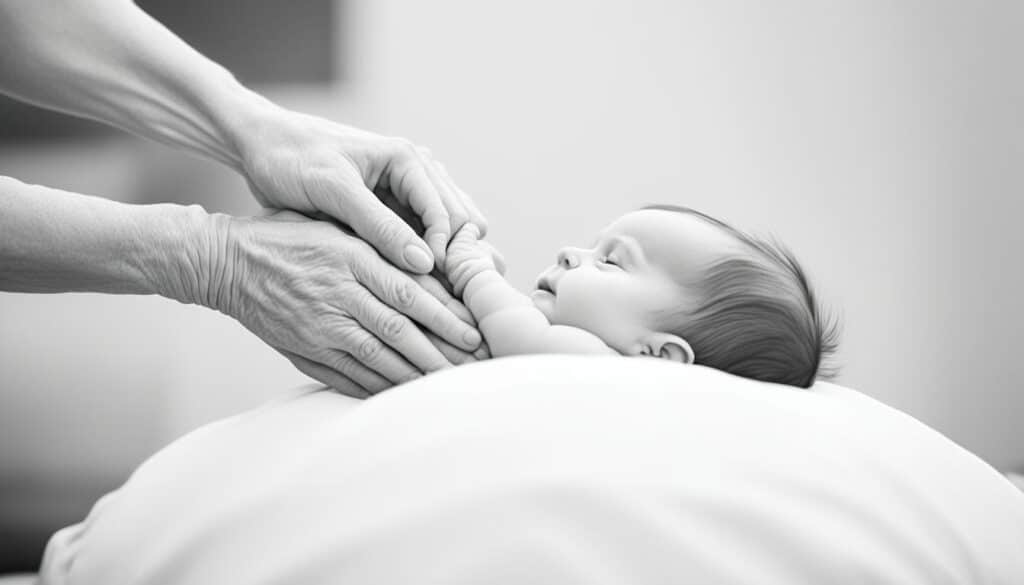
When you feel your baby move, it’s an exciting moment that strengthens the bond between you and your little one. But did you know that responding to your baby’s movements during pregnancy has long-lasting effects on their development and the mother-baby bond?
By gently pressing against the spot where your baby is moving, you communicate a powerful message: “I am here for you, and I will always be there to keep you safe.” This early form of communication helps your baby develop a sense of trust and security, knowing that they can rely on you.
When you respond to your baby’s movements, you teach them that their needs will be met and that they can explore the world with confidence. This trust becomes the foundation for their future exploration and discovery as they grow.
Exploring the world is an essential part of your baby’s development, and it all starts with the trust they develop during those tiny kicks and rolls in the womb. When you respond to your baby, you create a safe environment that encourages them to explore new things and handle new situations with confidence.
So, the next time you feel your baby move, take a moment to respond with a gentle touch. You’re not just connecting with your baby – you’re setting the stage for a lifetime of trust, exploration, and a strong mother-baby bond.
Why Trust and Exploration Matter
Trust is the building block of relationships, even at the earliest stages of life. By establishing trust during pregnancy, you lay the groundwork for a strong parent-child bond that will continue to grow long after your baby is born.
Exploration is a crucial aspect of your baby’s cognitive and emotional development. It helps them learn about the world around them, build new skills, and develop a sense of independence. By fostering exploration from the very beginning, you empower your baby to embrace new experiences and become a confident and curious individual.
Table: The Benefits of Responding to Your Baby’s Movements
| Benefits | Explanation |
|---|---|
| Enhances mother-baby bonding | Responding to your baby’s movements builds trust and strengthens the emotional connection between you and your little one. |
| Promotes a sense of safety and security | When your baby feels your response to their movements, they develop a sense of safety and trust, knowing that you are there to protect them. |
| Fosters exploration and confidence | By responding to your baby, you encourage them to explore their surroundings and handle new situations with confidence. |
| Improves cognitive and emotional development | Trust and exploration support your baby’s cognitive and emotional growth, laying the foundation for lifelong learning and resilience. |
Touching Your Baby Bump
Your baby’s sense of touch begins developing in the womb, and it’s essential to help them feel safe and accustomed to your touch. Rubbing your belly with oils or creams not only nourishes your skin but also provides a comforting sensation for both you and your baby. Talking or reading to your baby while gently touching your bump enhances the bond between you and your little one. This connection is strengthened through the sense of touch, creating an intimate and nurturing environment within the womb.
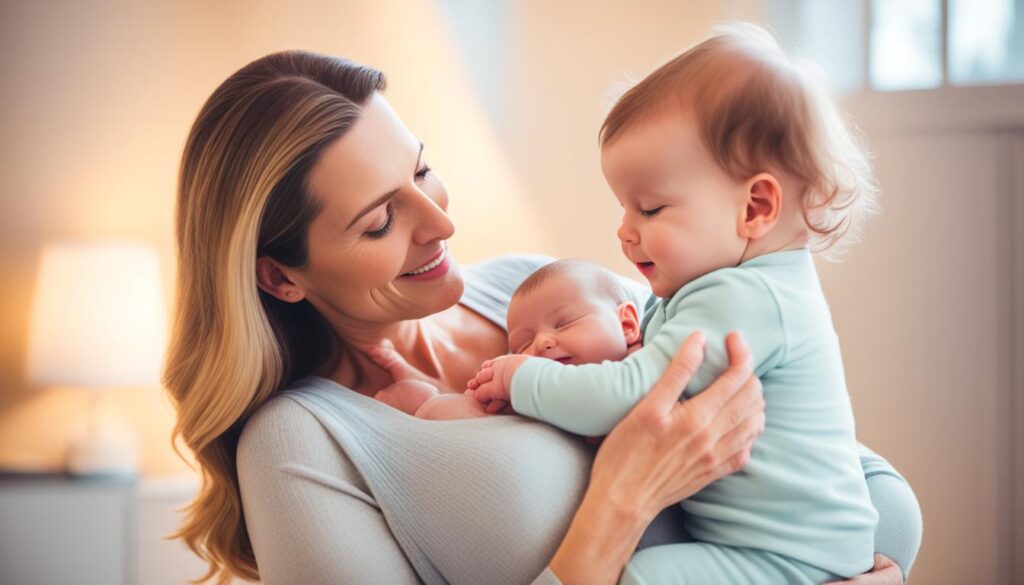
Once your baby is born, they will already feel a stronger attachment to you because they have experienced your comforting touch throughout pregnancy. The soothing sensations they have become accustomed to through touch make it easier to calm and comfort them when they’re upset or unsettled. By nurturing the bond through touch during pregnancy, you lay the foundation for a deep and meaningful connection that will continue to grow after birth.
Conclusion
Bonding with your unborn baby is a precious journey that begins during pregnancy. Engaging in activities such as talking and singing to your baby, responding to their movements, and touching your baby bump can help strengthen the parent-baby connection.
These activities not only enhance the bond but also contribute to your baby’s development, emotional well-being, and sense of safety. By involving fathers in the bonding process, you can also foster a lifelong relationship between father and child.
Cherish the magic of pregnancy and celebrate the special bond that will last a lifetime. Start creating a strong connection with your unborn baby today, laying the foundation for a deep and loving relationship that will continue to grow as they enter the world.
No Comments yet!